

WOOL: Chapter 5
Every step of one sweater brand's supply chain, from farm to finished good


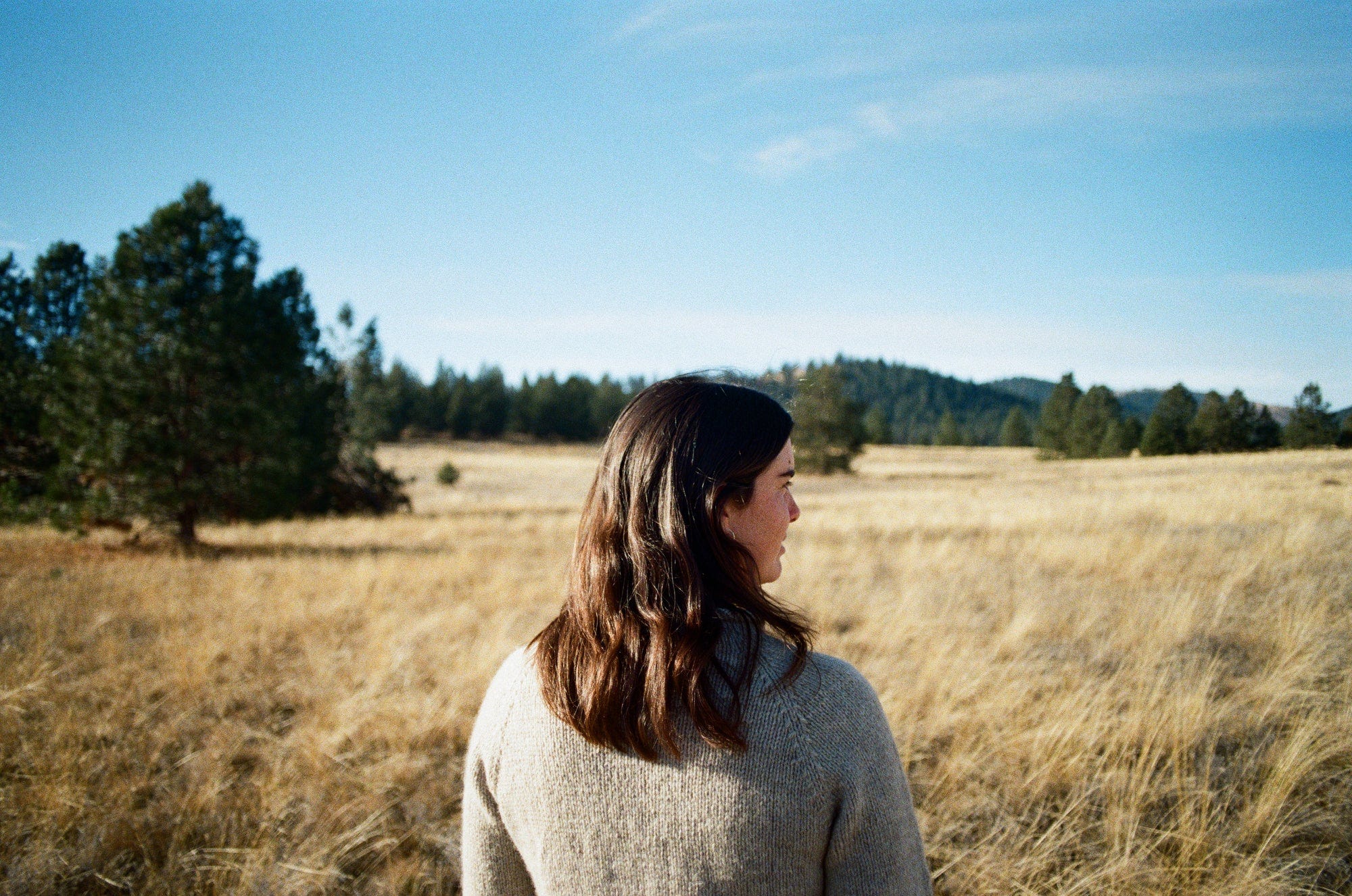
Here’s what continually fascinates me about how our clothes are made and where they come from: Before you buy a garment and pull it over your head for the first time, a piece of clothing has lived a whole other life outside your closet. It’s possible that it has even visited more states or countries and crossed more borders than you have. The journey from wool as a fiber to wool as a finished good is a long, complex process that differs from brand to brand, garment to garment. How much do you think about where your clothes come from?
For this latest chapter in the wool series, I teamed up with Mairin Wilson of The Mindful Designer's Almanac to take you on a full tour of her U.S. supply chain, from the fiber off the sheep’s back to your back, as an educational exercise in showing the complexities of making a basic shirt. Ever since she reached out in 2024, I’ve been following her journey to grow her natural fibers clothing brand Mairin. She sources fiber from several small, family-run farms: alpaca wool from Peru, and sheep wool from the High Andes and the American West.
Her full-fashion knit sweaters are made in Peru through a much simpler process, but the merino wool base layers and shirts, her most popular and requested products, have required far more steps—evidence that today’s wool supply chain is now a sliver of what it once was, hollowed out by decades of mill closures, offshore processing, and shrinking domestic demand. She’s among the few.
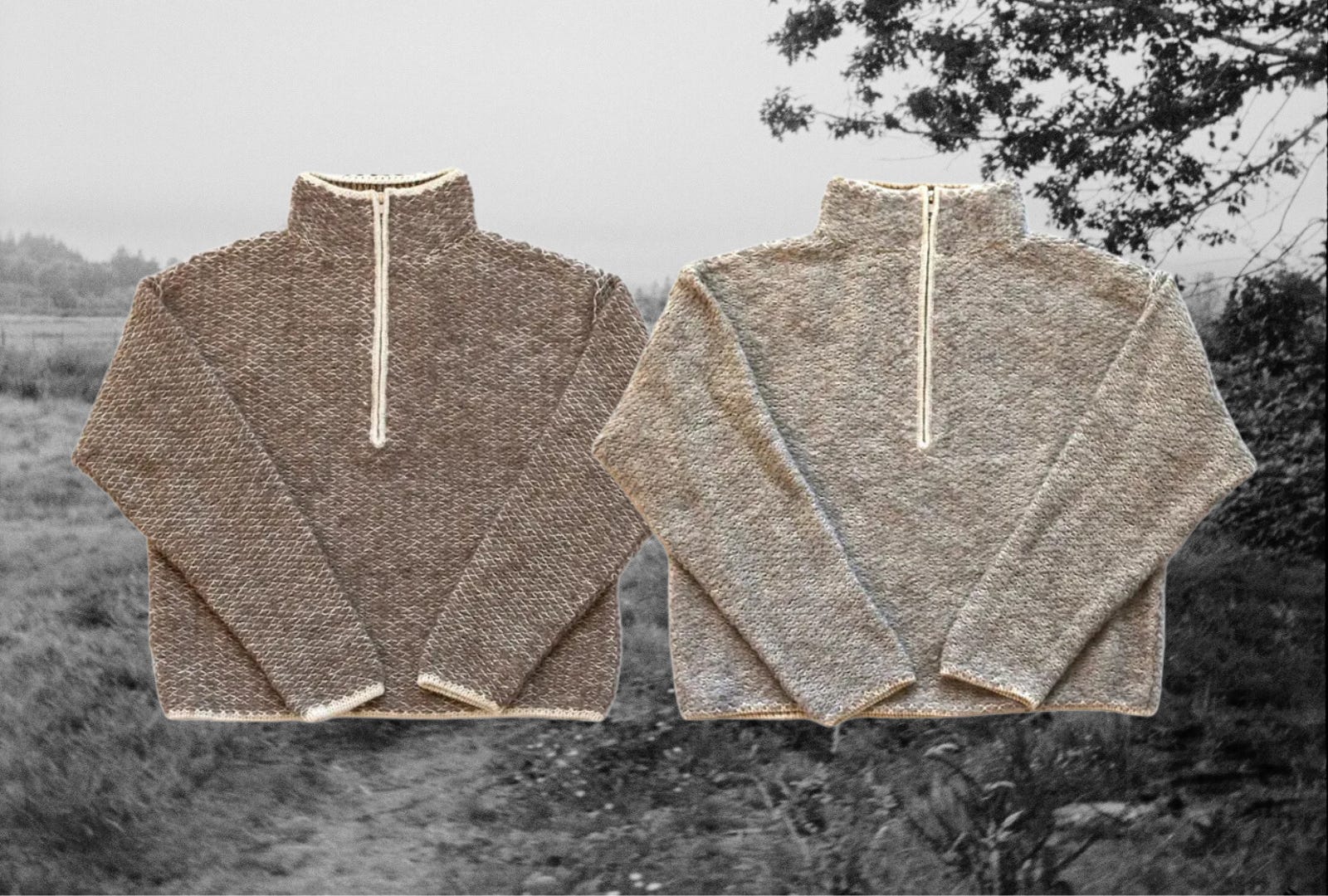
Today, she is launching these new zip sweaters out of a gorgeous alpaca wool and deadstock boucle that is basically just a natural version of Polartec Alpha Direct, the synthetic lightweight layering material that hikers goes nuts over. Mairin’s future products include unisex tees, long sleeves, and sweaters. Stay tuned.
Paying readers get early access to her shop for the Alpaca Half Zip, which is likely to sell out fast—scroll below the paywall for a link to the landing page.
Let’s hit the road with Mairin!
All the steps one small, woman-owned brand takes to make merino wool base layers and tees in the U.S.
1. Fiber from the sheep: Oregon and the American West
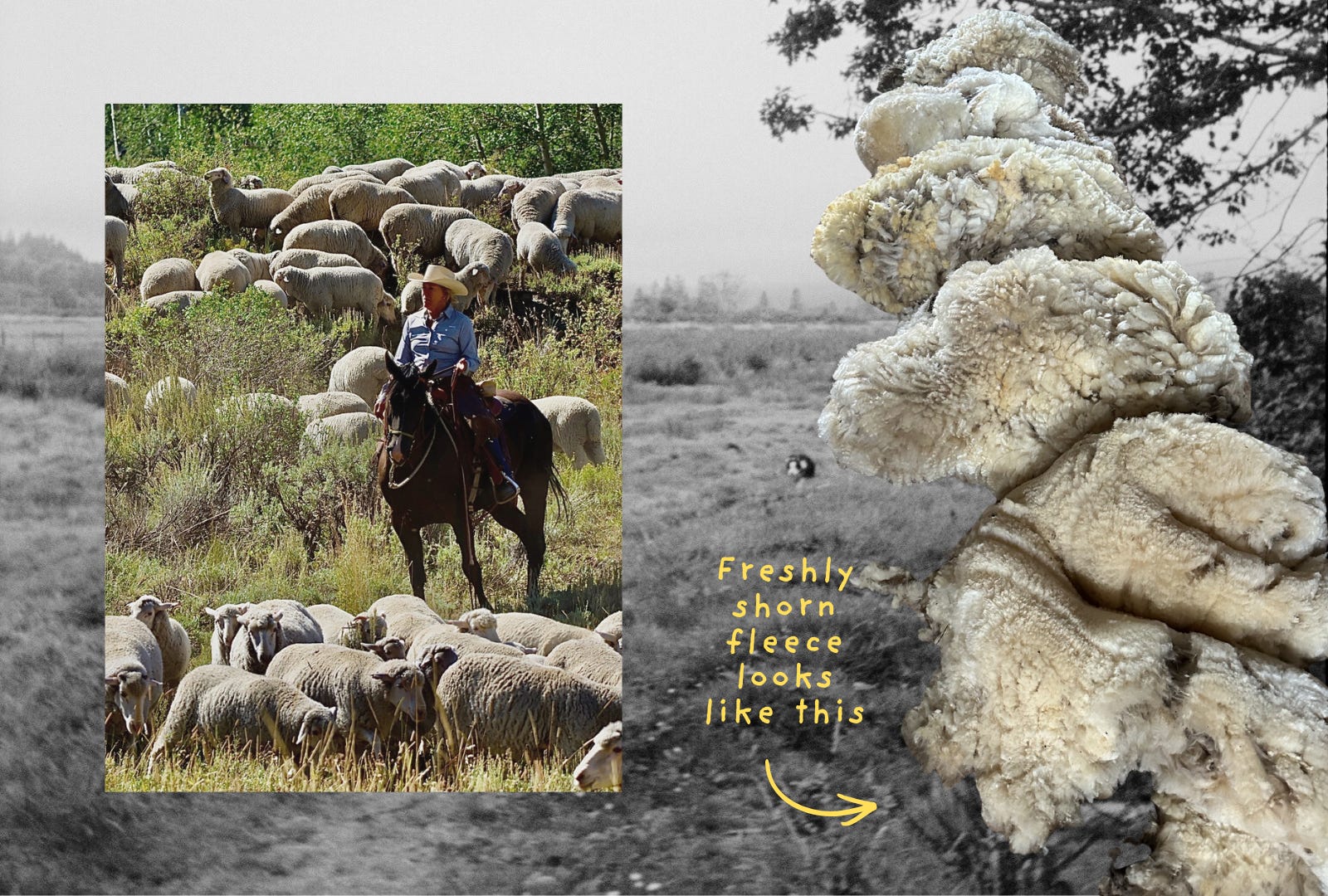
On a ranch in north central Oregon, sheep munch grass near the Deschutes River in the rain shadow of Mount Hood. They are under the care of Jeanne Carver of Imperial Stock Ranch, the first ranch in the world certified in 2017 under the Responsible Wool Standard, which evaluates animal welfare and land management. Spun out of the 150-year-old ranch’s legacy, Jeanne and her late husband Dan founded Shaniko Wool Company in 2018, bringing together a group of family ranches from across the American West to supply ethically grown wool at scale. Anybody who uses their wool can trace it back to nine or so ranches.
Collectively, they grow enough wool to supply big brands’ projects, such as Ralph Lauren’s Team USA official uniforms for five Winter Games. But Shaniko also supplies smaller brands like Mairin looking for wool grown responsibly in the U.S. “When I first heard about Shaniko, she had done a collaboration with Janessa Leone and they did a regenerative wool project,” Mairin says. At the time, she was working at ethical fashion brand Christy Dawn and while they didn’t end up using wool, Mairin filed the knowledge away for future use for her own brand.
The sheep that supply Shaniko live in California, Oregon, and the Rockies—and it’s no coincidence that Mairin’s main customers live in those same places.
Every year around this time, the sheep are shorn of their heavy, winter fleeces, which means the wool industry gets an infusion of fresh fiber to use.
2. Cleaned and turned into tops: Jamestown, South Carolina
When fleece is shorn off a sheep, it is full of organic matter—mud, poop, grass, lanolin. After shearing, the critical next step in wool processing is scouring, the essential cleaning process that prepares the raw fleece for spinning, weaving, and dyeing. Only one place in the U.S. is equipped to scour wool at a commercial level and that place is Chargeurs in Jamestown, South Carolina. Mairin says the minimum Chargeurs will take is 1,000 pounds of wool. (The only other two in the Americas are in Argentina and Uruguay, also major wool producers.)
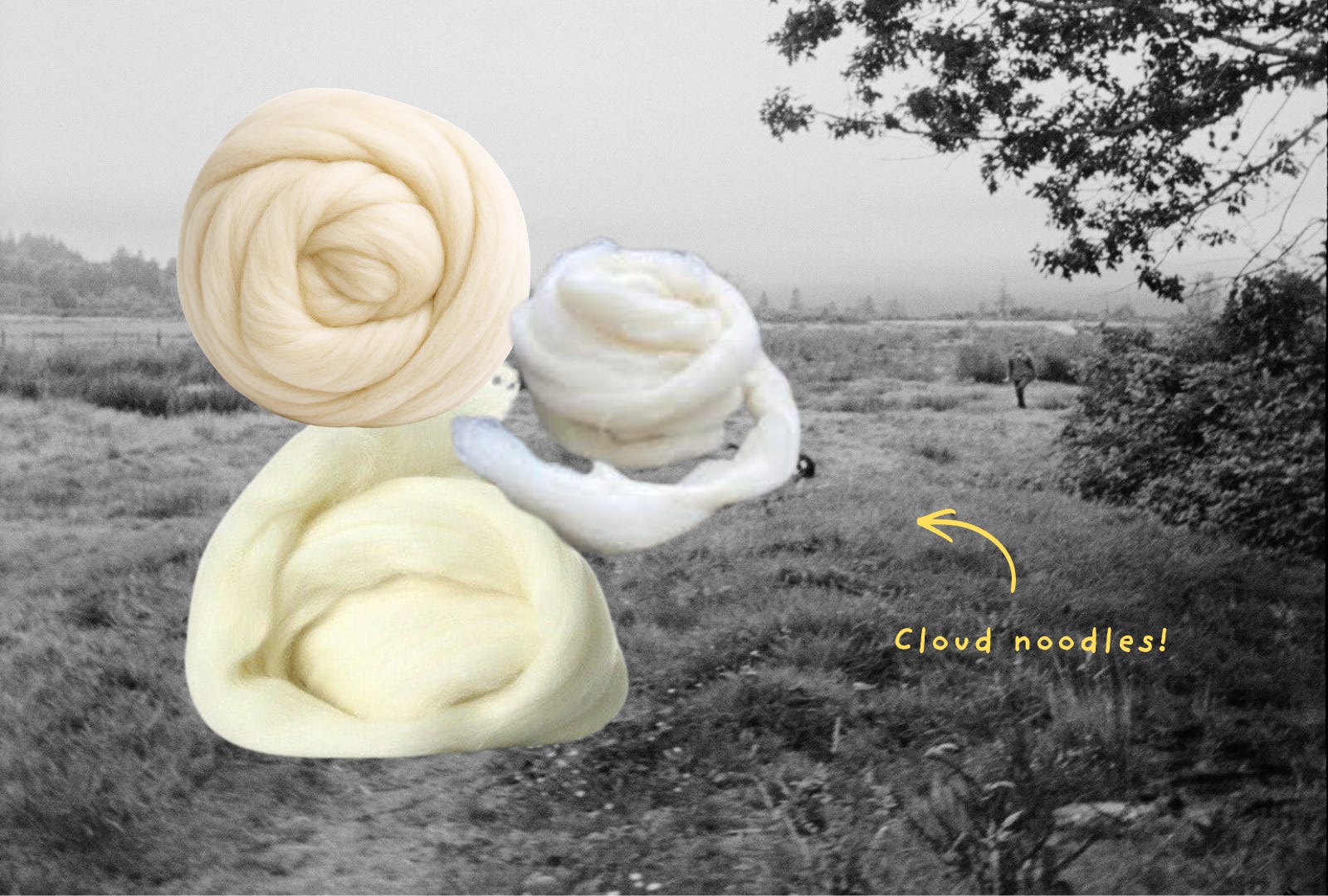
Once cleaned, the wool is then combed and turned into something called tops. “It’s like this big piece of yarn—just a big cloud noodle,” Mairin says.
At this point in the process, Mairin could choose to have her wool superwashed, a chemical treatment or coating that makes it easy to machine-wash and dry without shrinking or felting. However, she opts out because she likes wool’s natural properties. “It makes it so that I have a way different product and a little bit less consumer-friendly based on what consumers want right now,” she says. “A big part of what I’m trying to do is create clothing that preserves the function of the material in nature. The sheep have spent so long evolving and creating this amazing material that we get to use. They use it to keep themselves warm and dry and cool and all the things we want our clothing to do for us.”
3. Spun into yarn: Pickens, South Carolina
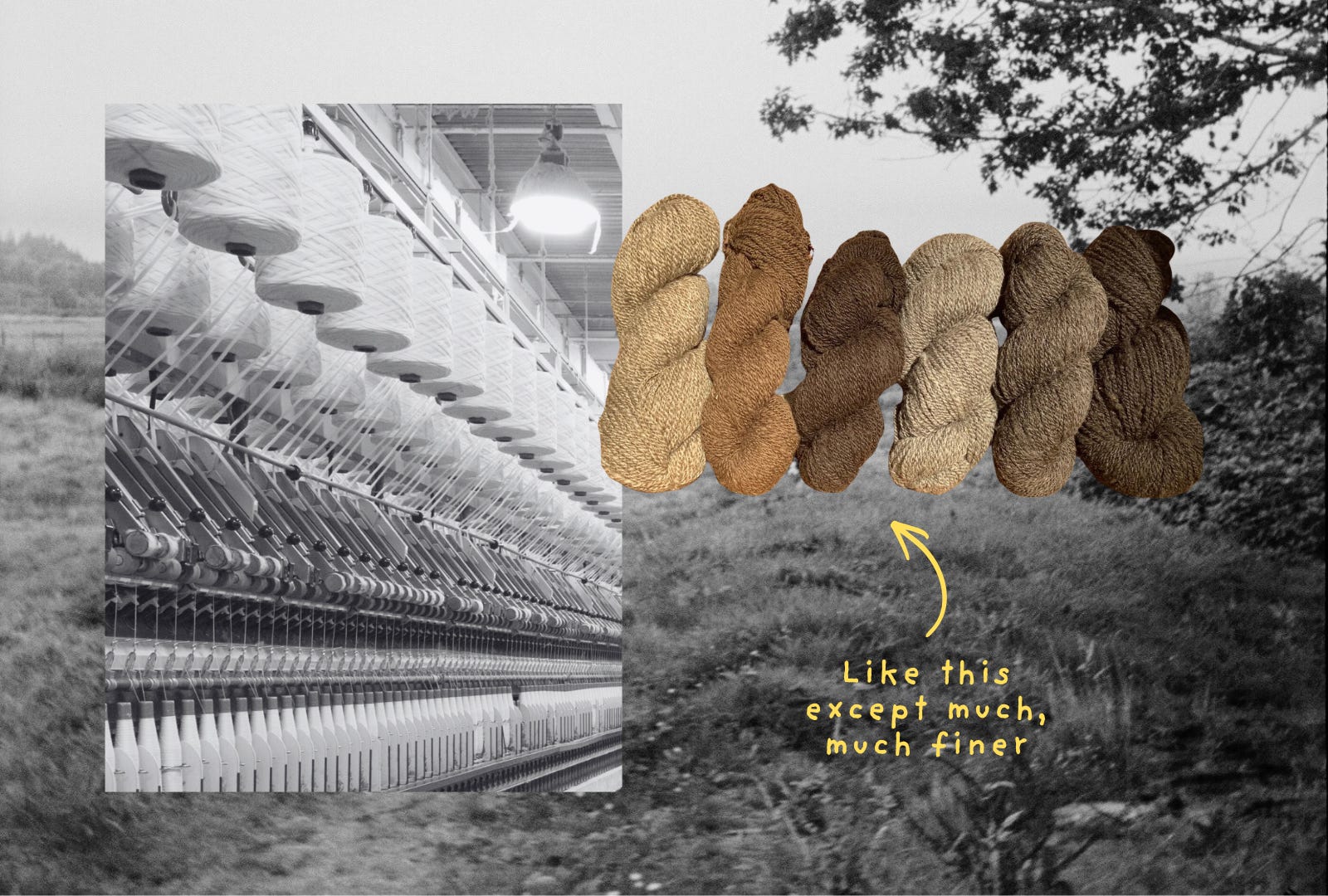
Wound into a barrel, those fluffy cloud noodles then travel 240 miles northwest to Kentwool Yarn, the only spinning mill that can spin the kind of yarn Mairin requires. There, they have machines that create worsted-spun (as opposed to woolen-spun) yarn, organized by the various grades. Ultrafine is 17.5 microns and under. Superfine is 17.6 to 18.5 microns. Fine is 18.6 to 19.5. Fine Medium is 19.6 to 20.5. Medium is 20.6 to 22.5. And Strong is 22.6 to about 24. The lower the micron, the softer the feel. The higher the micron, the sturdier the structure.
Because the spinning mill only spins one kind of thickness at a time, brands like Mairin have to wait their turn. “I also think their biggest client, like most of these places, is the U.S. military,” she says. “A small brand and even a small project like Shaniko Wool is nothing compared to clothing our troops.”
Mairin used to use 19 micron yarn, but it kept snapping on the knitting machines in the next step. So she increased it to 20 microns, which is what the military uses, hoping that it would be more readily available. That said, she is still on a 14-16-week wait (maybe less now since we talked in late May) and won’t know until July if it works. “This is the problem we’ve come up against every time we try to get more fabric so hopefully that won’t continue to happen, and I can restock and actually grow this project,” she says. “There’s also a chance that it won’t work.”
4. Knit into fabric and dyed: A knitting mill in Massachusetts
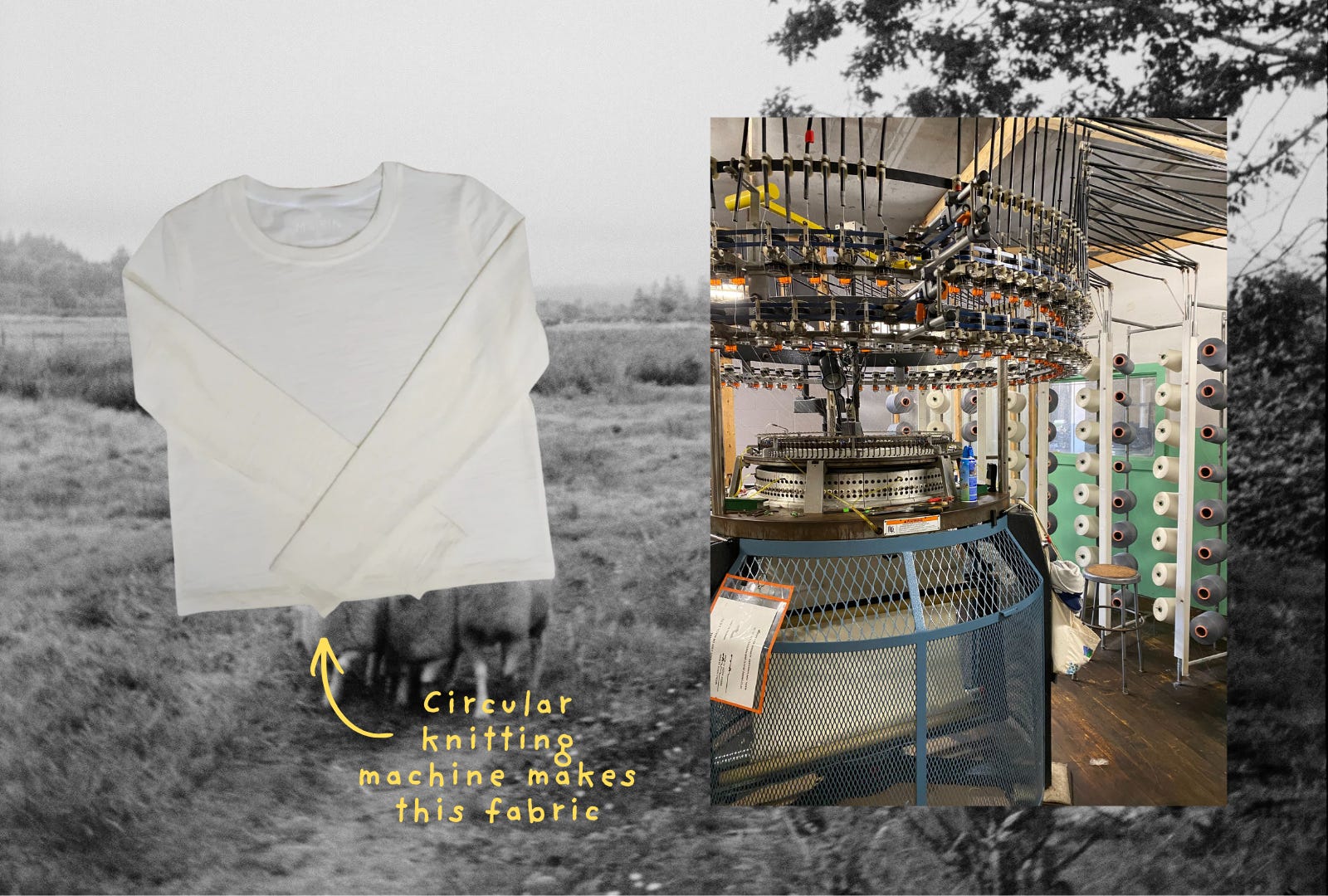
If and when she gets yarn, it is then knit into fabric on a crazy circular knitting machine in Massachusetts (or sometimes South Carolina). Dozens of tiny spools encircle a round, open-topped drum and produce yet another giant noodle, this time rigatoni-shaped. The tube is then cut into fabric yardage and washed one more time of a wax that makes the yarn feed faster through the machine. Right now, one yard of fabric costs about $28—about $3 more than a couple months agao because wool went up 30 percent—and it takes about a yard to sew a shirt.
This particular mill generously created a program of stock fabrics where they buy 1,000 pounds of wool and turn it into different fabric qualities. This means that as a small-batch brand, Mairin doesn’t have to buy large quantities when she won’t use it or can’t afford it. However, because of the challenges higher in the chain at the spinning mill, they don’t always have her fabric in stock. “It’s a great option but it’s a little tricky because it’s just never in stock when I need it,” she says.
5. Cut and sewn into a baselayer: A factory in Los Angeles
Hopefully later this year, the mills will resolve the kinks in the process and Mairin will have fabric to send to LA, where sewists cut and stitch her garments, which adds another $15 to $20 to each shirt for the labor. (Total is $55 now not including shipping.) But first, they wash it one more time—which adds $2 per shirt to her cost. Next, they follow her patterns to cut the wool jersey fabric into Mairin’s signature boxy bodices with tight sleeves, made to layer underneath a sweater. Then, they sew pieces together with cotton thread, careful to follow details in the pattern instructions. For instance, Mairin’s pattern maker added invisible darts at the bust, which you can’t see once finished. On the curve, sewists match up two notches before stitching the front to the back. “It fits better than flat,” Mairin says.
6. Stored as inventory and packed for shipping: Missoula, Montana
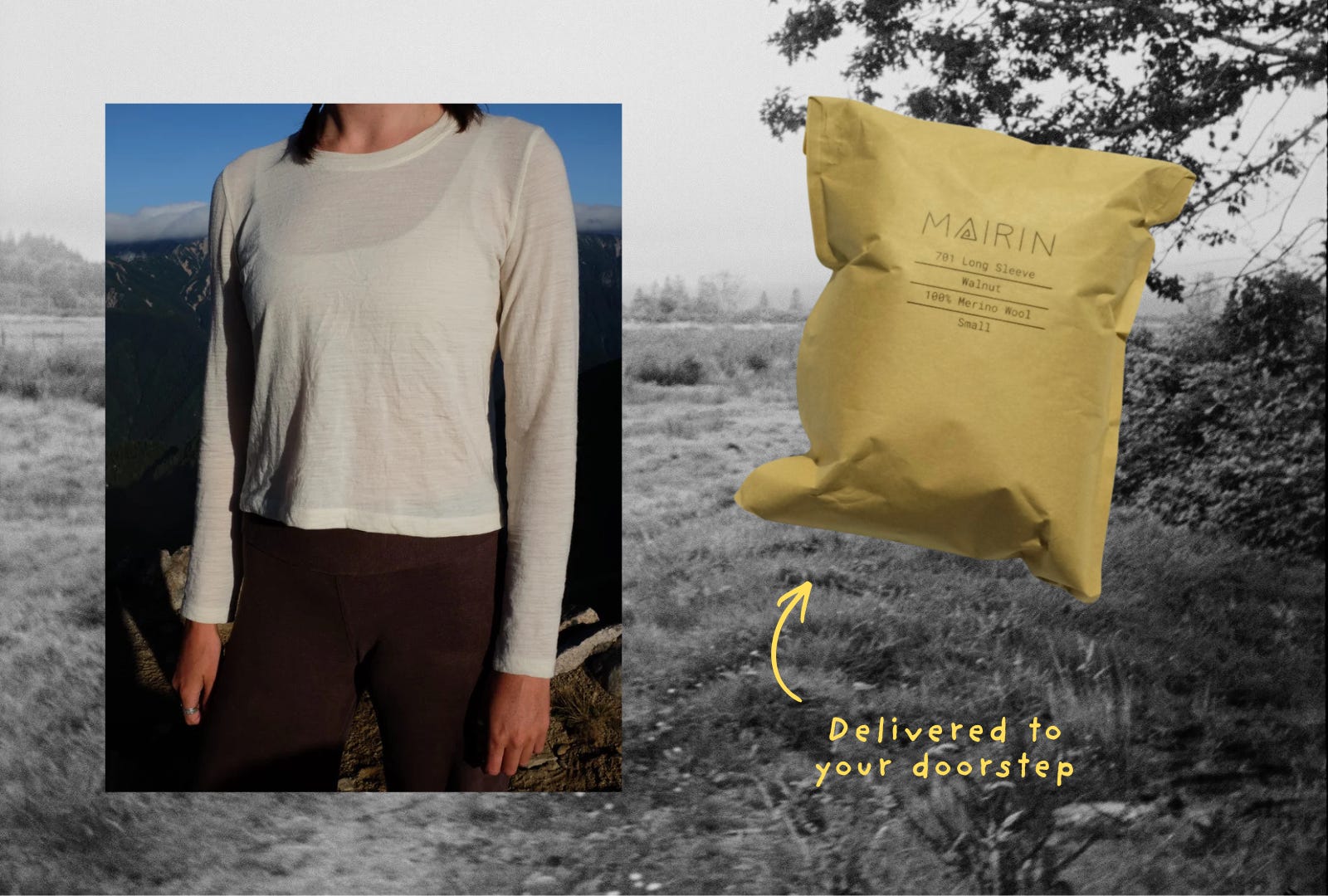
Mairin grew up in Montana and her mom owns a sewing store there. Mairin now lives in Baja Sur, Mexico, (we got coffee when I was there in February!) so her mom is in charge of shipping orders. Each order is neatly packed in paper, along with a personalized note, and sent from the shop. Any returns are also fulfilled at the studio. “My studio is a basement room at my mom’s store that has a big plastic sink and my boxes of inventory,” Mairin says. “Not as glamorous as it may seem.”
The Merino Long Sleeve costs $155 and the Merino Sleeveless costs $105—almost a 3X markup from the cost to make the shirts. Factor in shipping between all these places and other miscellaneous costs, and selling wholesale isn’t even an option. “It ends up being a pretty expensive shirt to make,” she says. “Sometimes people think, ‘Oh, it’s made in the U.S. so it must be cheaper’ but it’s not because it’s so small scale compared to what people are doing overseas. That’s fine with me because I think it’s a really awesome shirt and I think it’s worth it.”
Her customers must agree because it’s currently sold out. Let’s pray to the fabric mill gods that come September or October, Mairin will have another run of these bestselling shirts just in time for the chilly weather. I’m eyeing one.
Thank you so much to Mairin for giving us a transparent look into the process of making a wool shirt. She gifted me a sweater last year and it is one of the best things I own.
Next in the series: an interview with the owners of a new fine wool mill, a natural fibers project by a backpacking professor, a very important symbol in the wool world, and a distillation of my visit to the Outdoor Recreation Archive. See you next month!

 | A guest post by
|