

WOOL: Chapter 3
From handcraft to factory floor, wool’s rise to empire

This post is free for all subscribers thanks to wool&, a merino clothing brand based in Portland, Oregon making thoughtfully designed and stylish wool garments for everyday wear. They’ve graciously sponsored this post and the next one. They’re supporting the work—not shaping it. Everything you’re reading here is independently reported.
The wool history books keep coming, and I’m poring over them whenever I have a moment. Most mornings, I like to make myself a cappuccino or matcha, then sit on my couch and wait for the daylight to grow brighter while reading about wool. I must admit: There’s an overwhelming amount of information to sort through. My research has led me to nomadic wool production in Mongolia1, wooly dogs bred by Indigenous peoples in the Pacific Northwest2, and the exceptional weavers living in the Outer Hebrides3. I’m now realizing that in my quest to learn as much about wool as possible this year, I will barely scratch the surface.
My original intention for Chapter 3 was to trace the rise of wool production and understand how it became such a widely used, foundational fiber across the world. The deeper I went into books and corners of the internet, the more the scope expanded. The story of wool is oceanic, stretching across continents, economies, and centuries. So rather than attempting to cover everything, I’ve narrowed my focus to the transformation of wool, from handcraft to industry. That pulls us largely into England and the American colonies, where we see wool production scale and become embedded in the global economy. It’s tempting to romanticize the artistry, innovation, and even simplicity from this time. But we cannot separate the fact that wool’s growth unfolded alongside colonization, shaped by slavery, forced labor, and the displacement of native people. Wool’s rise was not without racism, sexism, danger in factories and fields, and greed.
Instead of rehashing what has already been thoroughly documented by others—including by Peggy Hart in Wool: Unraveling an American Story of Artisans and Innovation, published in 2017—I’m approaching this chapter through a timeline, as a curation of the most interesting moments that chart wool’s ascent and cultural significance. Think of it as wool’s “greatest hits.”
(Spoiler: In Chapter 4, we’ll see the wool empire crumble.)
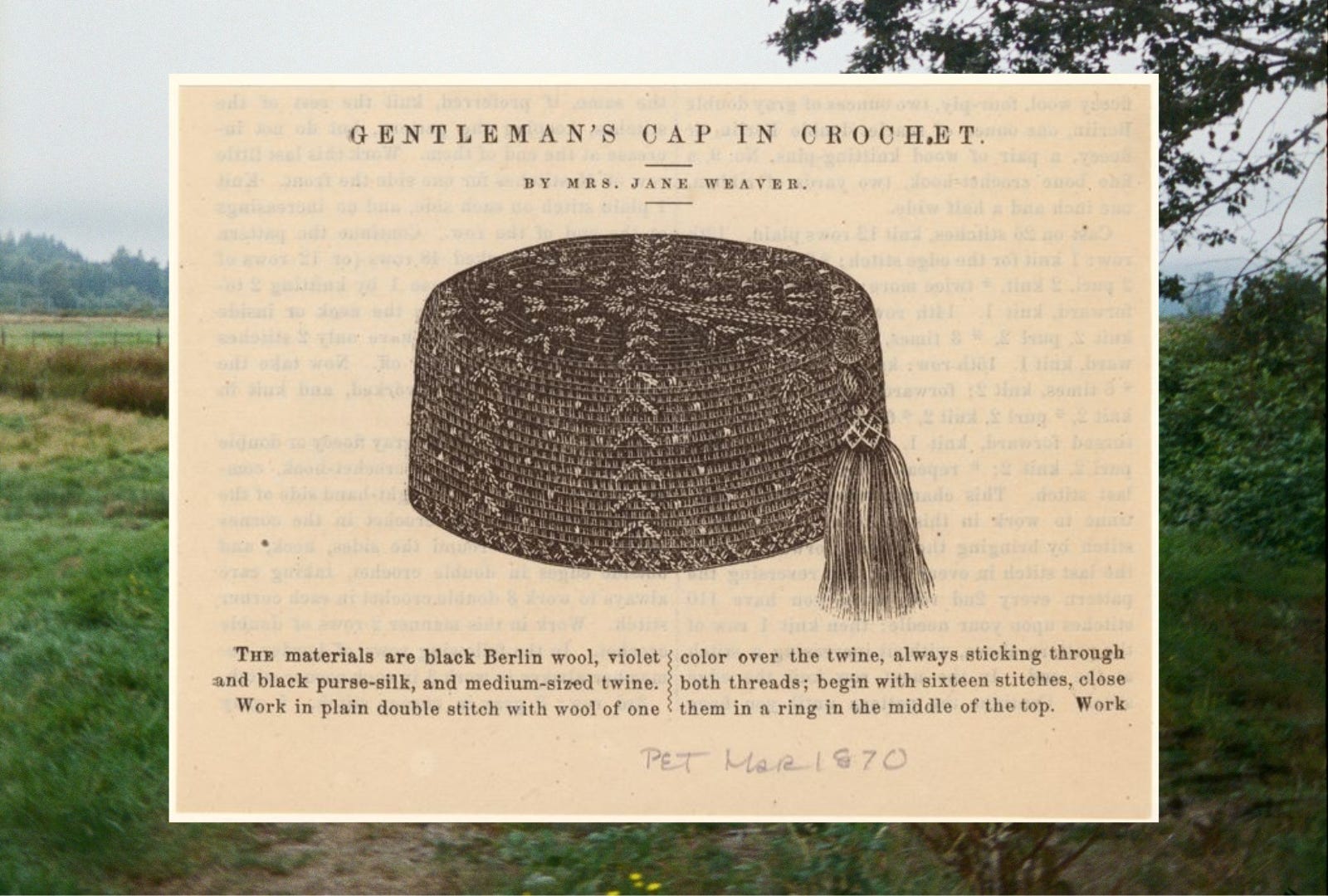
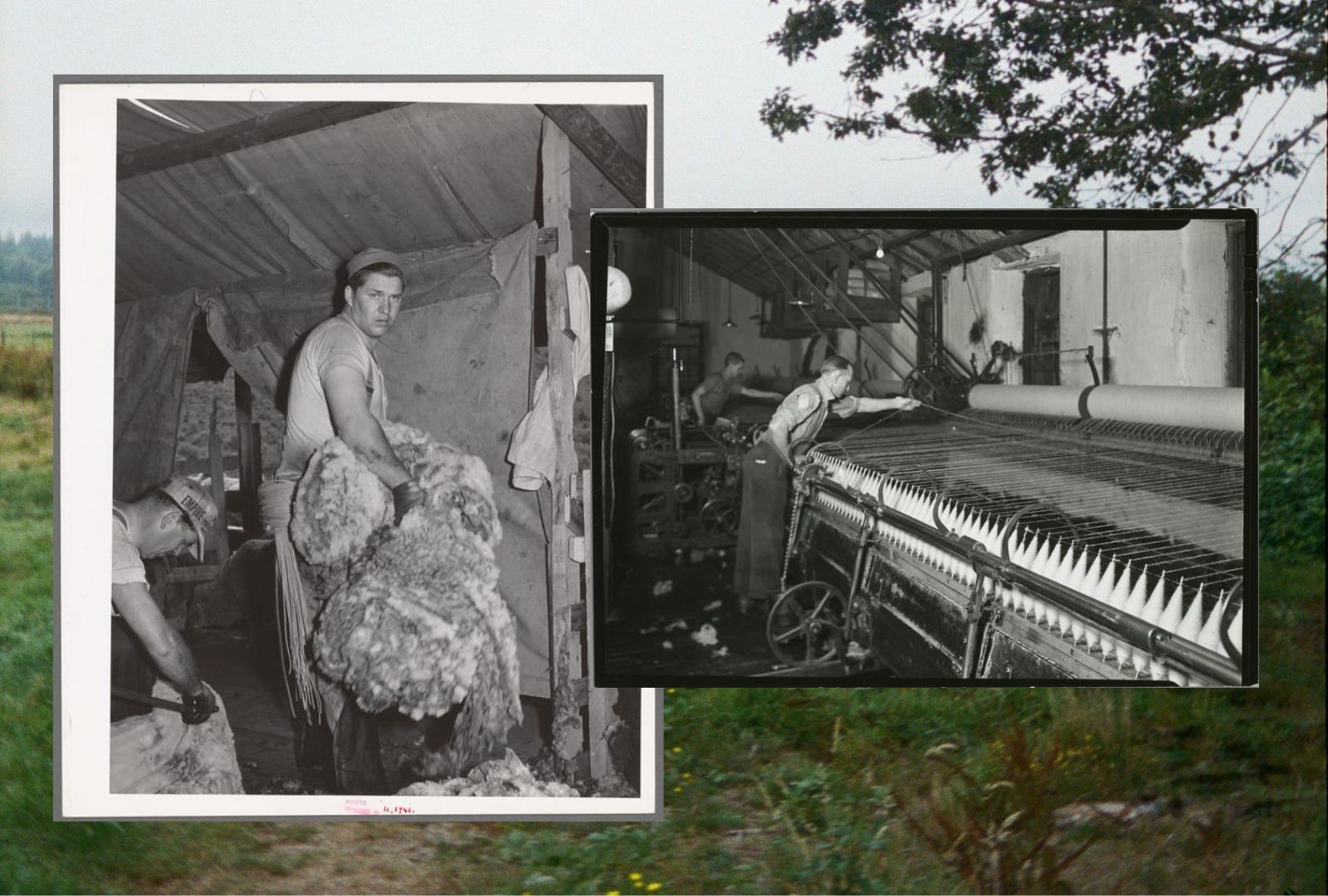
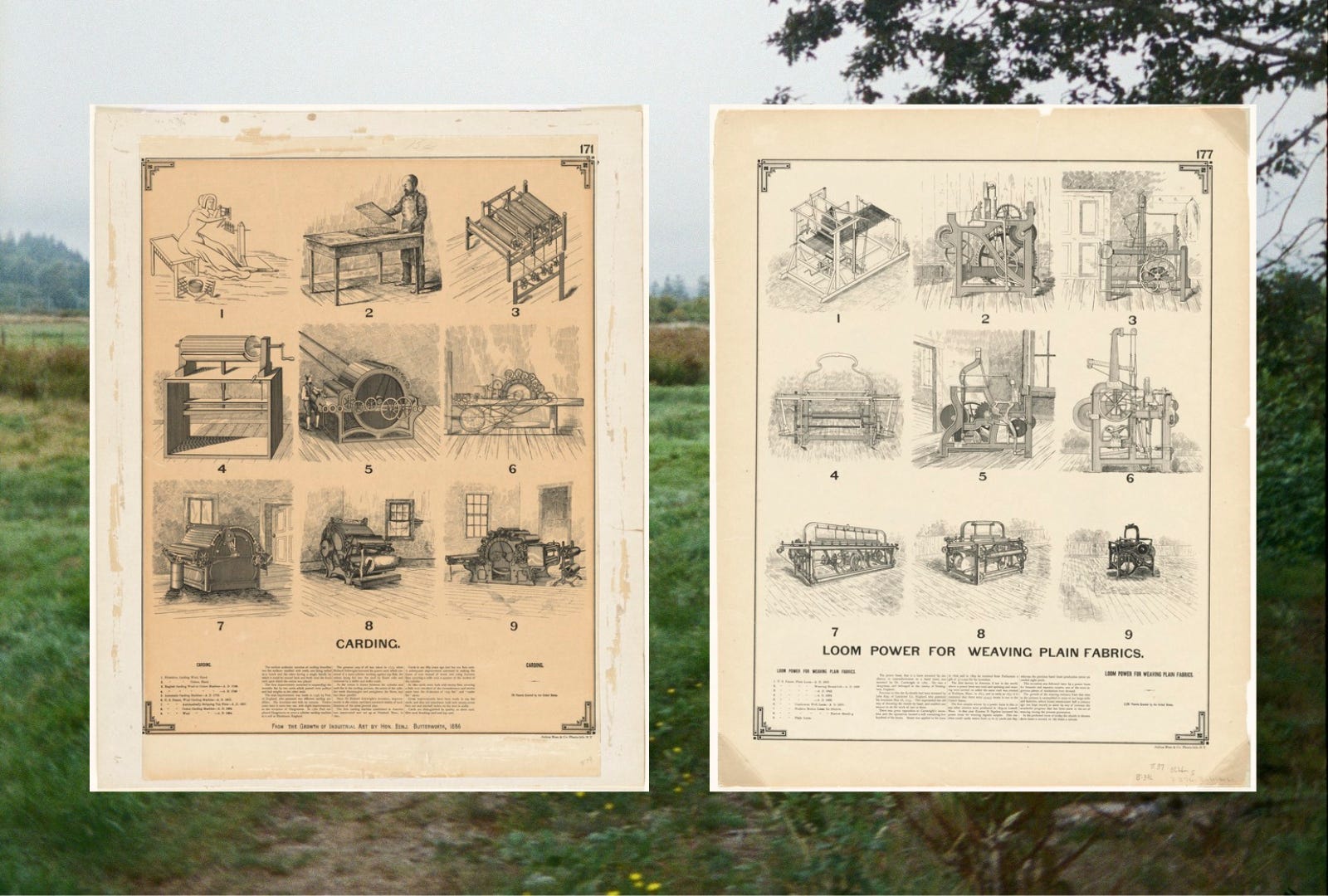
400 AD - 1500s A lot happened during this timeframe: the first cloth fairs, weavers guilds, and shepherd abbeys are established. Knit caps and socks became popular. And sheep outnumbered people during the Black Plague. Pertaining to wool production, carding and weaving of cotton or wool was done at home or in guilds.4 Then, waterpower changes everything.
1570 Queen Elizabeth I established a tradition in which English nobles knelt on sacks of wool when pledging loyalty to the Crown. Members of Parliament and the Lord Mayor of London also took their seats on wool, symbolizing the nation’s reliance on the fiber for its power. Another law required every English citizen (except nobility) age six or older to wear a woolly cap on Sabbath and Holy Days.5
1589 Clergyman William Lee invented the first mechanical stocking-knitting machine. Rumor has it, he “thought a lass he was wooing was more focused on her knitting than she was on him (though it seems entirely plausible she was doing her best to politely ignore him and he was just a dude who couldn’t take a hint). An alternative…version holds that Lee was already married and was trying to spare his long-suffering wife further manual labor.”6
1599 Knitted monmouth caps were all the rage among sailors and military men, the latter of which wore them underneath their protective steel helmets.7
1645 The General Court of Massachusetts Bay ordered rural towns to increase sheep production and forbade the export of ewes and slaughter of lambs younger than two. “Forasmuch as wollon cotton is so useful a commodity without which wee cannot so comfortably subsist in these parts, by the reason of the cold winters, it being also, at present, very scarce and deare among us.”8
1656-1665 An order in Massachusetts required families “not employed in other useful occupations” to spin three pounds of fiber (linen or wool) 30 weeks out of the year, and another act act not ten years later required children to learn to spin and weave.
1667 When England produces more wool cloth than it can sell, the Flannel Act requires “all dead must be buried with woolen cloth.”9
1699 In Britain, the Wool Act of 1699 forbade the export of wool and sheep from England to protect the industry from the colonies. “Wool or woolen goods could not be carried by ship or horse from one colony to another.”10
1757 A four-book, blank-verse didactic poem titled “The Fleece” by John Dyer celebrated the British wool trade, detailing sheep tending, shearing, weaving, and commerce.11 Iconic. Here’s how it starts:
The care of sheep, the labours of the loom,
And arts of trade, I sing. Ye rural Nymphs!
Ye Swains, and princely Merchants! aid the verse.
And ye, high-trusted Guardians of our Isle
Whom public voice approves, or lot of birth,5
To the great charge assigns! ye Good of all
Degrees, all sects! be present to my song.
1765 King George III of England made trading wool to the colonies a publishable offense. The punishment? Cutting off the offender’s right hand. Along with the Stamp Act of 1765, this policy helps incite the Revolutionary War.12
1767 George Washington, who kept a weaving workshop at Mount Vernon, wove his own cloth until 1771 as a cost experiment. He wanted to find out whether home manufacture was more cost effective than importing goods. The verdict: It was not.13
1768 In protest of England’s restrictions on wool trade, the Harvard graduating class all wear suits spun and woven in the colonies.14 (I could not find a photo, sorry.)
1797 The Fox Brothers open Coldharbour Mill in Uffculme, Devon, one of the first woolen mills in the UK. The mill transformed fleece from all over the world into yarn and cloth.15
Also in 1797 Australia gets its first Merino sheep and began breeding them, ultimately becoming the largest producer of wool in the world16, still true to this day.
1810 When the Peninsular War breaks out between France and Spain, Spain moved its precious, fiercely-protected sheep out of harm’s way. The U.S. got 20,000 Merino sheep, bought by the American consul in Portugal and various traders.17
1812 Head count. By then, there were 10 million sheep in the U.S. and about 7 million humans—1.4 sheep per person.18
1825 New Yorkers produce about ten yards of cloth per person at home. Although exporting sheep from England remains punishable by death, the United States is simultaneously building the Erie Canal—an artery that soon becomes vital for transporting wool.19
1834 Mill workers’ wages were abruptly cut by 15 percent. Girls (literally) in Lowell, Massachusetts became the first workers in the U.S. to ever go on strike. Their group marched from mill to mill, urging other women to join them. Sadly, it didn’t change much right away.20
1845 New Zealand enters the wool chat, becoming one of the world’s largest wool producers.
1860 Rather than wood, brick, or stone floors, carpets become popular in homes. Out of the U.S.’s consumption of 100 million pounds of wool, nine million pounds are used to produce carpets.
1880 Wyoming saw its first major sheep boom in the 1880s, followed by another one in 1897, when a tariff was put on Australian wool. By 1908, Wyoming led the U.S. in wool production.21
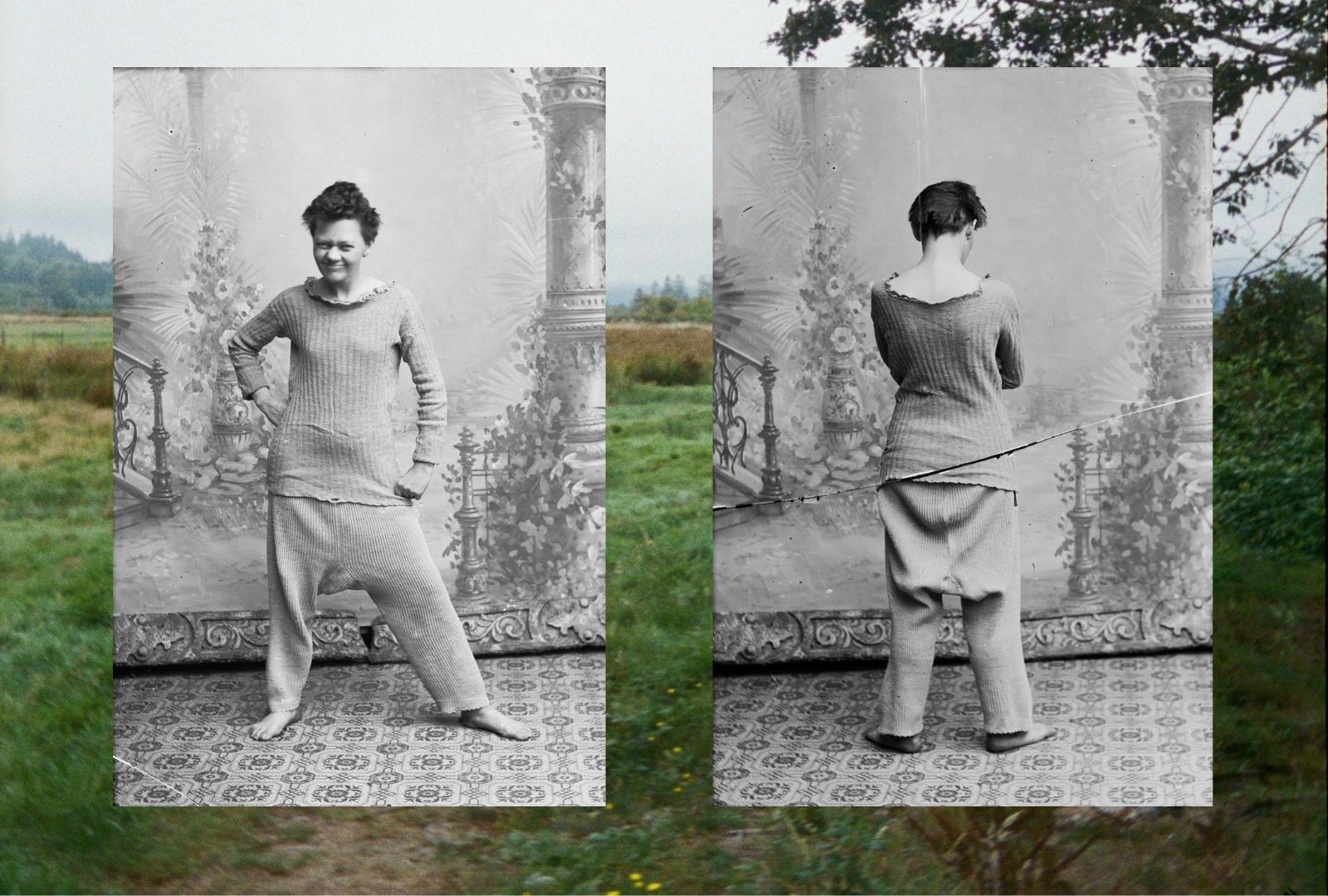
1899 George Franks Ivey teaches the first textile course at North Carolina State University. The college expanded the textile program to include courses such as carding and spinning, weaving, textile designing, and textile chemistry and dyeing.22
1900 Warren Clay Coleman, a formerly enslaved man, founded the Coleman Manufacturing Company in 1900 in North Carolina, one of the first Black-owned and operated textile mills, producing yarn, cloth, and hosiery.23
1907 The University of Wyoming offered a PhD in wool when the state was “home to more than six million sheep and fewer than 150,000 people, a ratio of about 41 to 1—with the goal of improving the quality of western fleeces.”24
1913 Heading into the First World War, a young designer named Coco Chanel reinvented fashion rules and produced a fine wool jersey dress—the material had previously been used solely for men’s underwear.25
1918 During a three-day knitting bee in Central Park, hosted by the Comforts Committee of the Navy League, knitters of all ages, genders, and abilities crafted warm wool garments for the soldiers: 50 sweaters, nearly as many mufflers, 224 pairs of socks, and 40 head-and-neck coverings called “wool helmets.”26 This is part of the volunteer-led wool brigades with slogans like “knit or fight” and “knit your bit.”
1952 Organized by the American Wool Growers Association, Texas hosted the first annual Miss Wool of America pageant. The winner would promote the industry on a national tour wearing the latest in woolen fashion. At this point, Texas is the largest U.S. wool producer, with 10 million sheep.
1954 Only 18 years old, a burgeoning young designer named Yves Saint Laurent won first and third prizes in the dress category of the International Wool Secretariat competition in Paris. The 21-year-old Karl Lagerfeld, who eventually took over Chanel in 1983, won first prize in the coat category.27
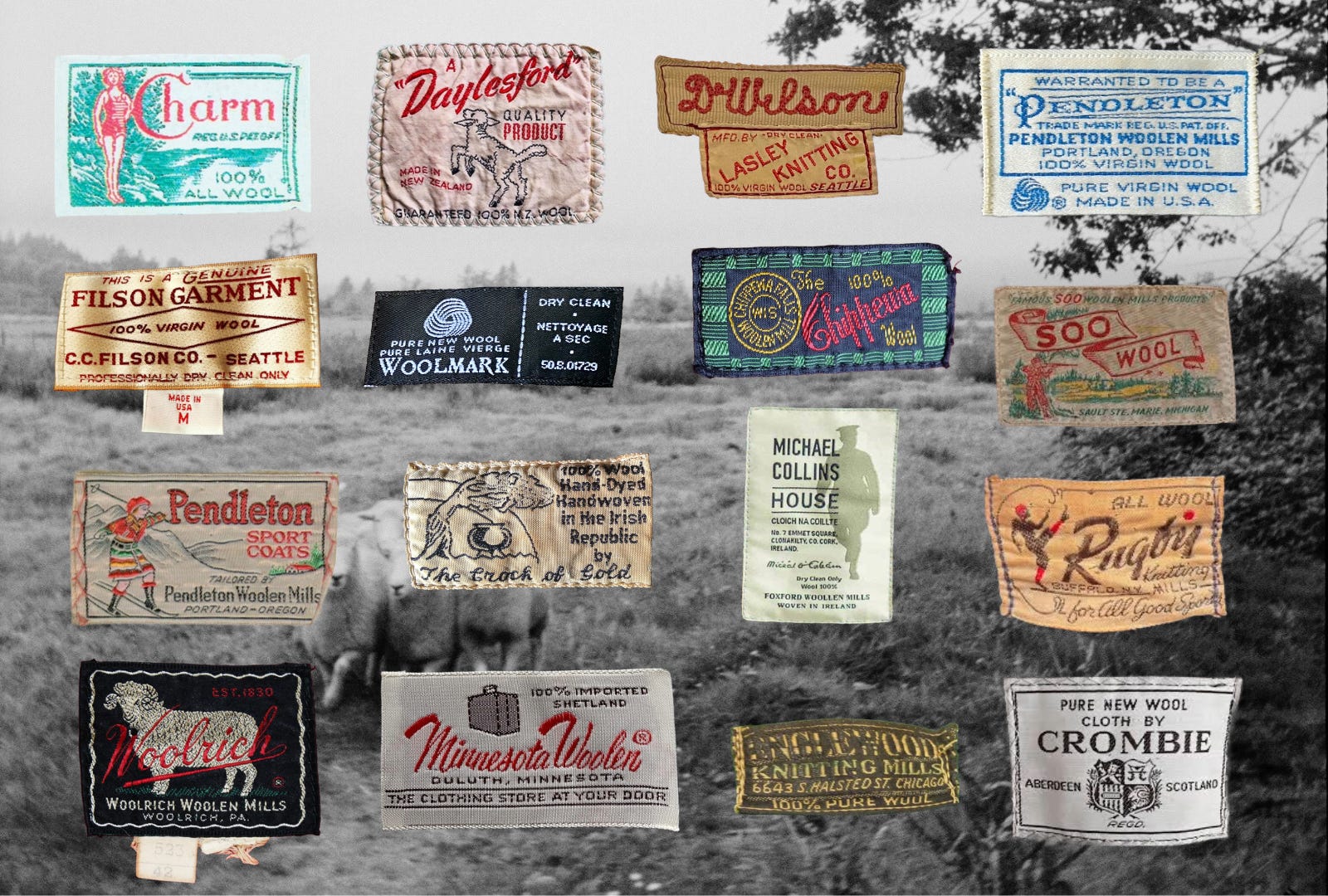
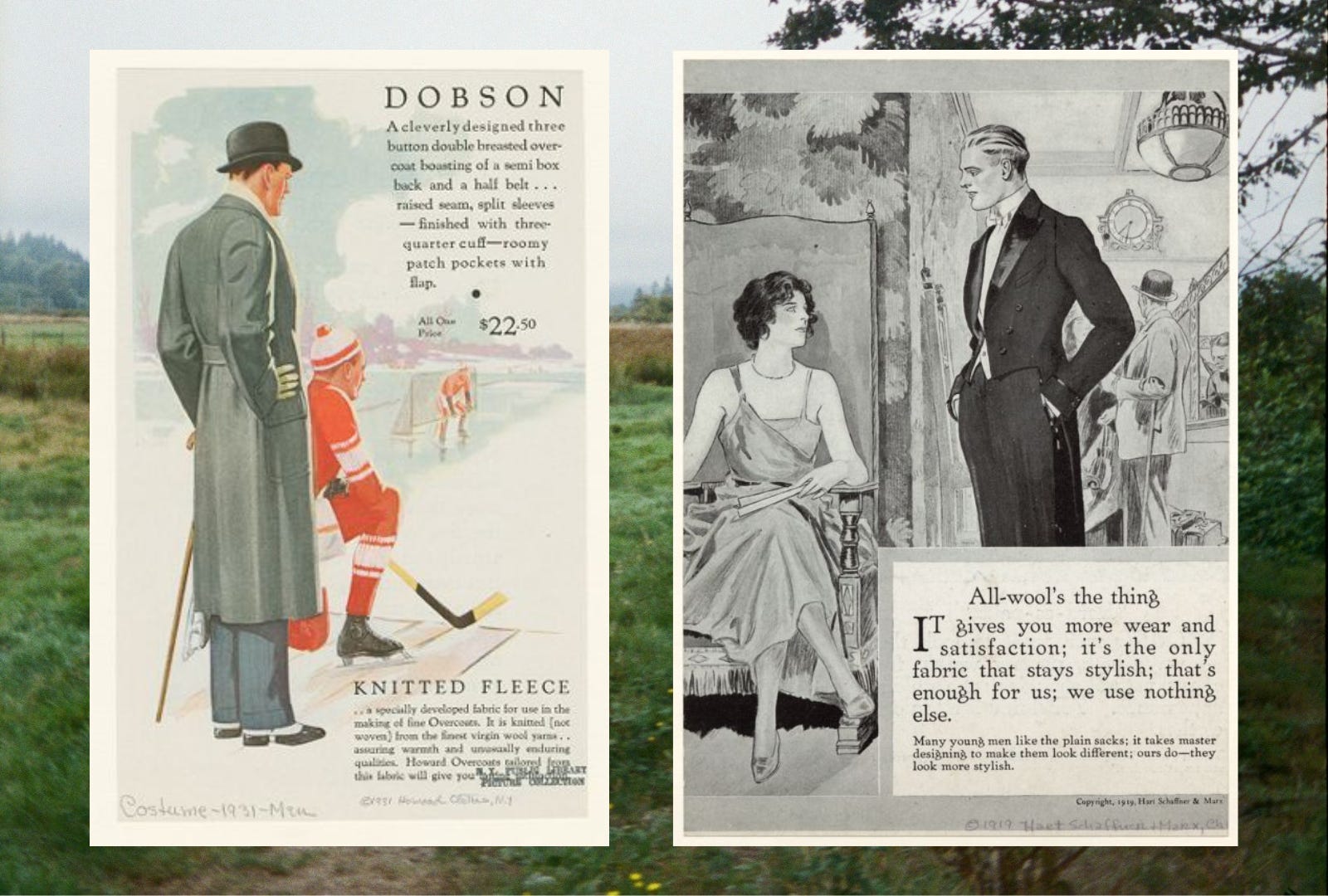
1958 The Textile Fiber Products Identification Act mandates fiber content labeling by percentages of all textile fiber products used for wearing apparel, costumes, and accessories.28 (Examples of tags above!)
Phew. That’s it for Chapter 3. There are many other dates I could’ve added, and I might add more in the future, but fearing information overload, that’ll do it for now. As I alluded to earlier, next we’ll look at how and why wool fell out of favor.
https://textileexchange.org/wool/
https://www.americanindianmagazine.org/story/a-woolly-tale
https://outerhebridesheritage.org.uk/discover/harris-tweed-an-islands-story/
https://textileheritagemuseum.org/textiles-ancient-times-to-modern-day/
https://www.facebook.com/thetudorintruders/posts/in-1571-elizabeth-i-passed-a-law-requiring-every-english-citizen-above-the-age-o/1443569787412770/
Unraveling: What I Learned About Life While Shearing Sheep, Dyeing Wool, and Making the World’s Ugliest Sweater by Peggy Orenstein
https://worldinaspin.com/sites/default/files/2025-09/2025WoolStoryTimeline.pdf
Wool: Unraveling an American Story of Artisans and Innovation by Peggy Hart
https://worldinaspin.com/sites/default/files/2025-09/2025WoolStoryTimeline.pdf
Wool: Unraveling an American Story of Artisans and Innovation by Peggy Hart
https://en.wikisource.org/wiki/The_Poems_of_John_Dyer/The_Fleece
https://wool-bedding.com/blogs/wool-blog/america-s-first-wool-farmers-artisans
Wool: Unraveling an American Story of Artisans and Innovation by Peggy Hart
https://worldinaspin.com/sites/default/files/2025-09/2025WoolStoryTimeline.pdf
https://www.coldharbourmill.org.uk/
https://www.nma.gov.au/defining-moments/resources/merino-sheep-introduced
Wool: Unraveling an American Story of Artisans and Innovation by Peggy Hart
Wool: Unraveling an American Story of Artisans and Innovation by Peggy Hart
https://worldinaspin.com/sites/default/files/2025-09/2025WoolStoryTimeline.pdf
Unraveling: What I Learned About Life While Shearing Sheep, Dyeing Wool, and Making the World’s Ugliest Sweater by Peggy Orenstein
Worn: A People’s History of Clothing by Sofi Thanhauser; https://www.wyohistory.org/encyclopedia/wyoming-sheep-business
https://www.lib.ncsu.edu/archivedexhibits/textiles/early.html
https://www.anb.org/articles/10/10-01932.html
Worn: A People’s History of Clothing by Sofi Thanhauser
https://www.metmuseum.org/essays/gabrielle-coco-chanel-1883-1971-and-the-house-of-chanel
https://www.atlasobscura.com/articles/when-knitting-was-a-patriotic-duty-wwi-homefront-wool-brigades
https://museeyslparis.com/en/biography/emmenagement-a-paris
https://worldinaspin.com/sites/default/files/2025-09/2025WoolStoryTimeline.pdf
Oh fantastic read. Our shop is in the Wyandotte mill in Pittsfield, and allegedly holds the “longest running” title. So much history and industry. Ps if you haven’t read blood in the machine it’s worth a speed run.