

WOOL: Chapter 7
What do you get when a next-gen outdoor brand teams up with a heritage Italian wool mill? The perfect shag fleece.

One of the biggest misconceptions about wool is that it’s only a cold-weather textile. Items that come to mind are big sweaters, thick blankets, cozy socks, worn while curled up by the fire. And it’s true that wool is excellent at insulating because its microscopic crimped fibers trap pockets of air, actively manage moisture, and resist temperature shifts. But wouldn’t you know, that’s also what makes it ideal for warm weather, too. Naturally hydrophilic, its fibers absorb sweat vapor (up to 30x its weight in water) then release it into the air, creating a natural cooling effect. Wool is what we call a thermoregulating textile.
I’ve been running a lot lately and my laundry is full of mostly synthetic activewear. I’ll be soaked after a long run, all the way down to my sports bra. I’ve been better about hanging each piece to dry before dumping it into the pile of other dirty clothes. For a 5-mile run on Wednesday morning, since most of my other shirts were in there, I pulled on a super-soft wool t-shirt from the Swedish brand Klättermusen. The 7 a.m. air felt a little chilly (60°F) but I warmed up quickly under the wool. As sweat beaded, my shirt didn’t cling to my skin or become wet. I stayed cool and comfortable even as the sun warmed the sidewalk.
The deeper I get into this wool series, you've probably noticed that my focus is narrowing. I started with a broad curiosity about wool and its history, but I'm ending up somewhere much more specific with wool as a performance material. This trajectory is shaped by my work as a gear writer and tester, in which I spend a lot of time evaluating the latest technical fabrics and innovations. Alongside X, Y, and Z new manmade fabrics, wool has always held its own. The more I’ve paid attention to what actually performed the best in the field, the more I’ve realized that one of the most capable performance materials has been with us all along.
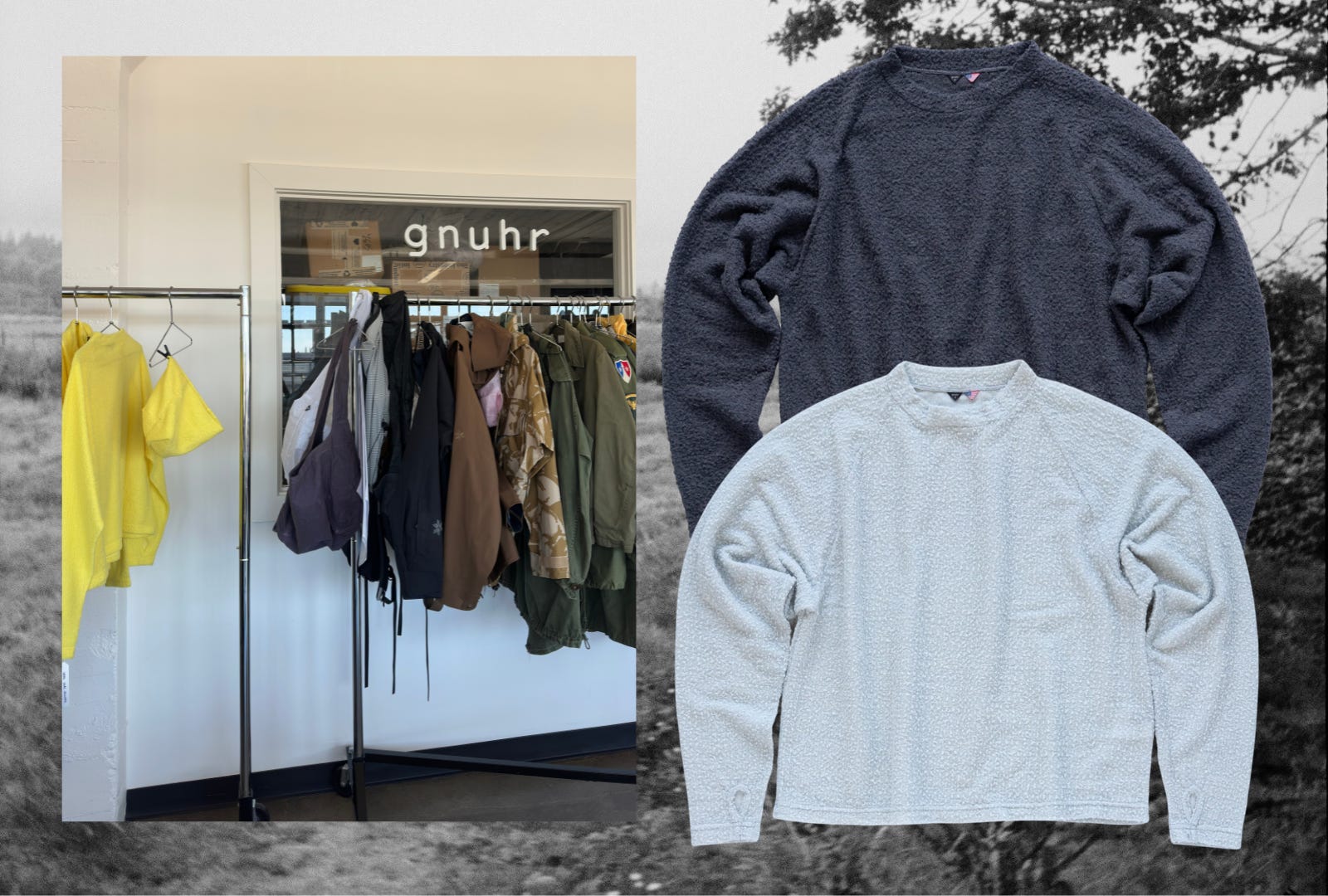
Today’s chapter brings us to an outdoor brand that’s making hoodies and crewnecks from some of the finest wool in the world. Two chapters ago we zeroed in on the supply chain of one small sweater brand. And now we’ll zoom into the relationship between a young brand called gnuhr and a 74-year-old Italian wool mill. Together, they’re creating some of the interesting wool pieces out there.
Behind gnuhr’s partnership with Italian mill Pontetorto
Three or four years ago, Nur Abbas was walking the floor of the Functional Fabric Fair hosted in his home of Portland, Oregon. The twice-annual trade show is where gear designers and textile nerds go to scout the latest fabrics, trims, zippers, and other materials. Without a plan, it's easy to get overwhelmed. But Nur had a clear goal: Find a merino wool fabric for the ultralight-focused outdoor brand he was building, gnuhr. Among the rows of exhibitors, he spotted the historic Italian textile mill Pontetorto. He'd worked with the company before during his time at fashion houses like Margiela and Louis Vuitton. It had been years, but he knew they’d have the exact merino wool he was looking for.
“We were working with these lightweight Alpha Direct pieces from Polartec that were amazing,” Nur says. “And then we saw this and we're like, oh, wait, like, this could do the same thing but have the extra benefits with the wool. I think we were one of the first people to see it. We immediately ordered a sample, so we could cut and sew some pieces in the studio.”
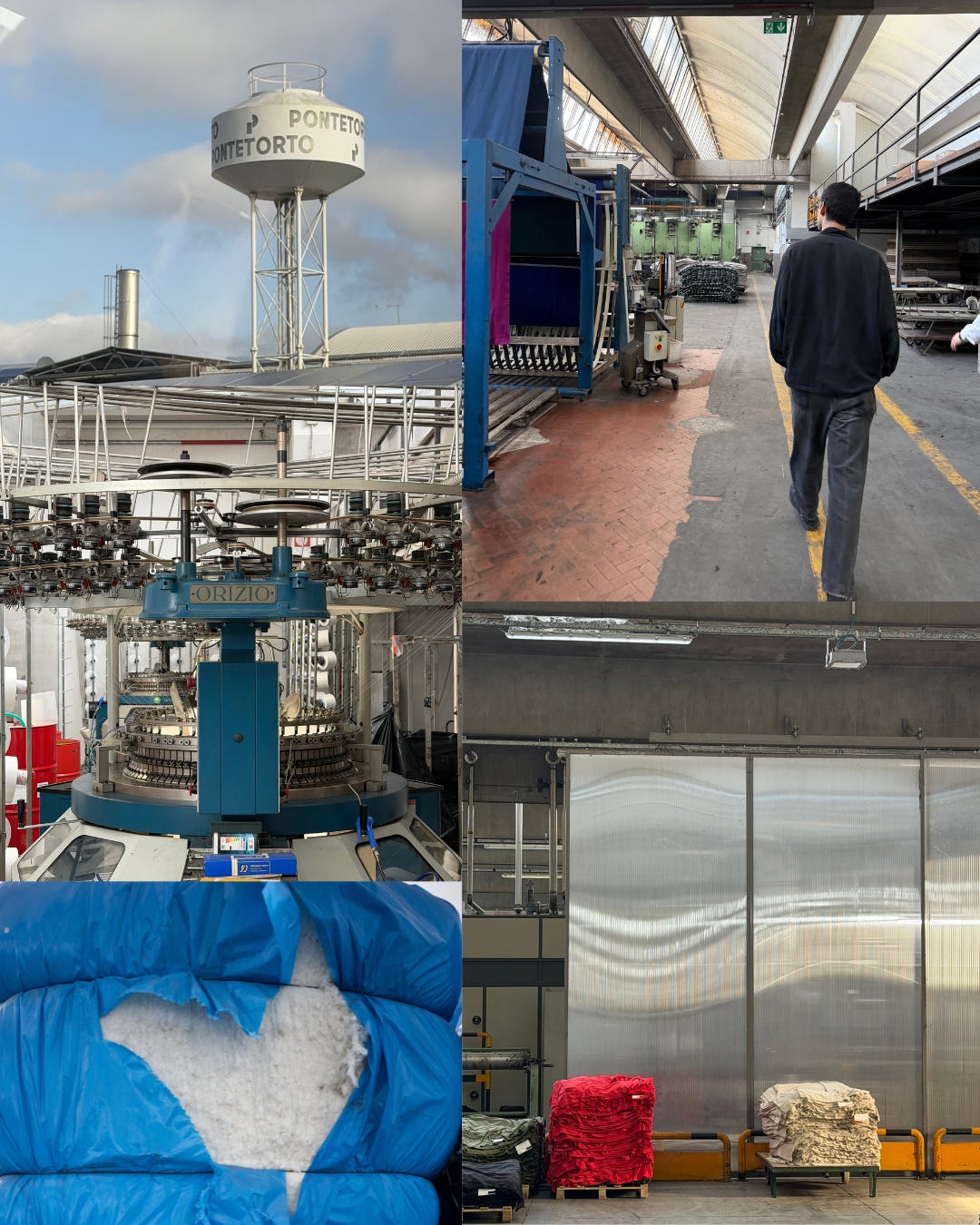
Pontetorto was founded by the Banci family in 1952 in Prato, Italy’s historic textile district. The region’s manufacturing heritage dates back to the Middle Ages1, when a reliable network of water-powered canals (called gore) fed machinery long before electricity. In the early 1800s, a local engineer named Giovanni Battista Mazzoni2 helped modernize the industry by refining spinning machines and designing new equipment for carding, fulling, and finishing wool. His innovations accelerated production and helped cement Prato's reputation as one of Europe's premier textile centers. By the late 19th century, the city had also become synonymous with recycled wool, pioneering techniques for turning discarded garments and textile scraps into new yarn.
Pontetorto built upon that reputation. In 1985, the company became the first mill in Europe to develop a range of pile fleece fabrics for activewear, introducing the now famous Tecnopile label, made fully of synthetics. Later on they created Tecnowool, offered as 100% merino or a blend of merino/polyester/nylon.3
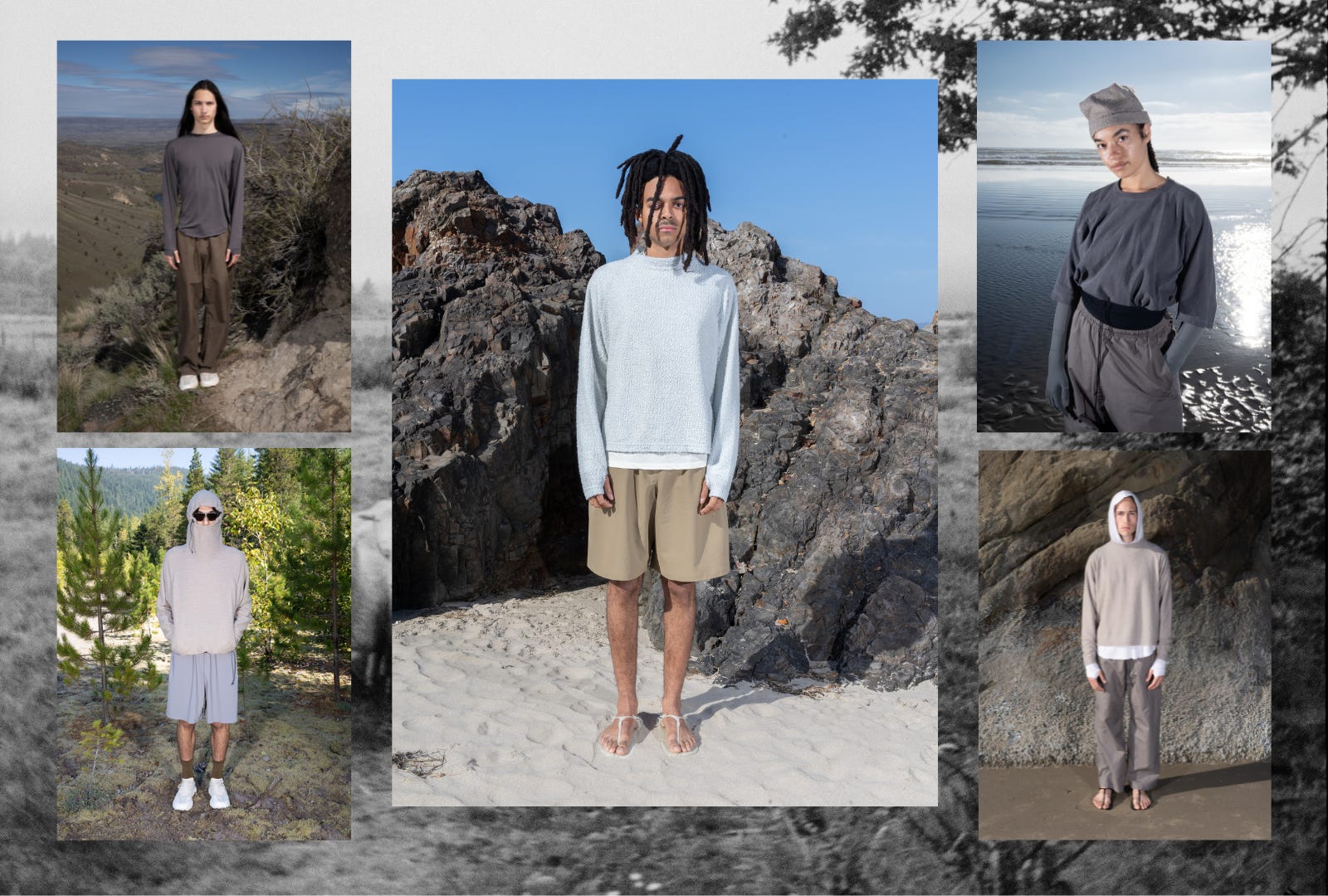
Out of Pontetorto’s products, gnuhr uses a few different fabric compositions. Immediately, Nur loved how the first sample looked and felt, and he green-lit production. One of the inaugural products gnuhr made with the Pontetorto fabric was the Wool Shag Sweater (61% poly, 30% wool, 9% nylon), a “deceptively simple” classic pullover with a universal fit. Next came the Wool Shag Hoodie with drawcords at the chin and hem for cinching in warmth. Both have sold out multiple times now and were recently restocked. There’s also the Creeper Crew Merino and Creeper Hood Merino (52% virgin wool, 48% nylon). Also, beanies!
The shag fabric has a pebbly texture that’s soft and lofty but incredibly lightweight, while the merino fabric is silky smooth and even slightly transparent.
“Hopefully everyone who wants it can get hold of it, but it's already going very quickly,” Nur says. To anyone who’s too quick to judge them for engineering scarcity, he adds, “We're a small business. We're trying to make as much as possible and meet demand, but that doesn't always go to plan.”
Making wool fabric takes time. Most fiber sheep grow fleece only once a year, and Pontetorto, as a family-owned mill, has only so much capacity—even for a company as nimble and responsive as they are, Nur says. Then there’s dyeing, a process that requires its own level of intention and consideration.
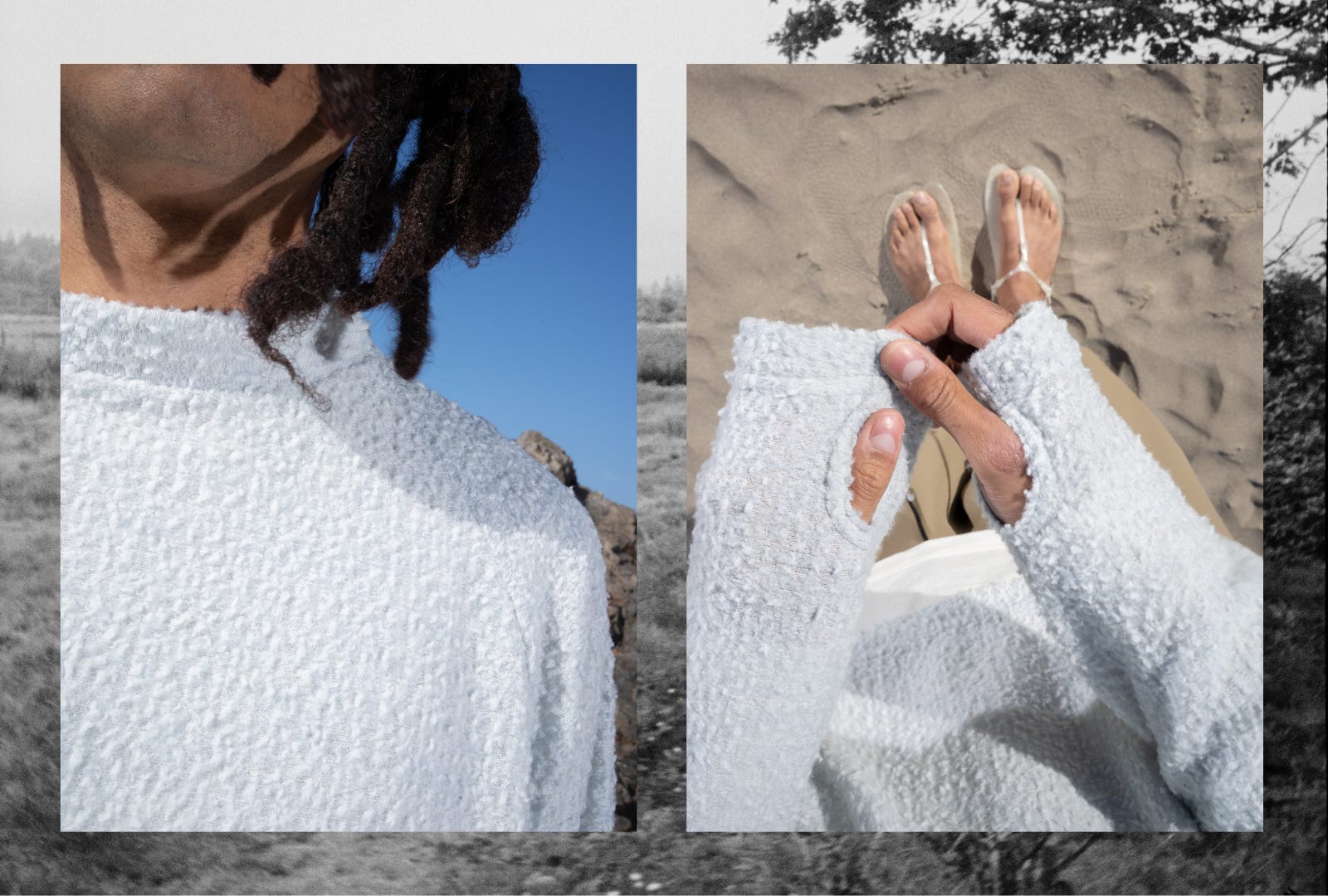
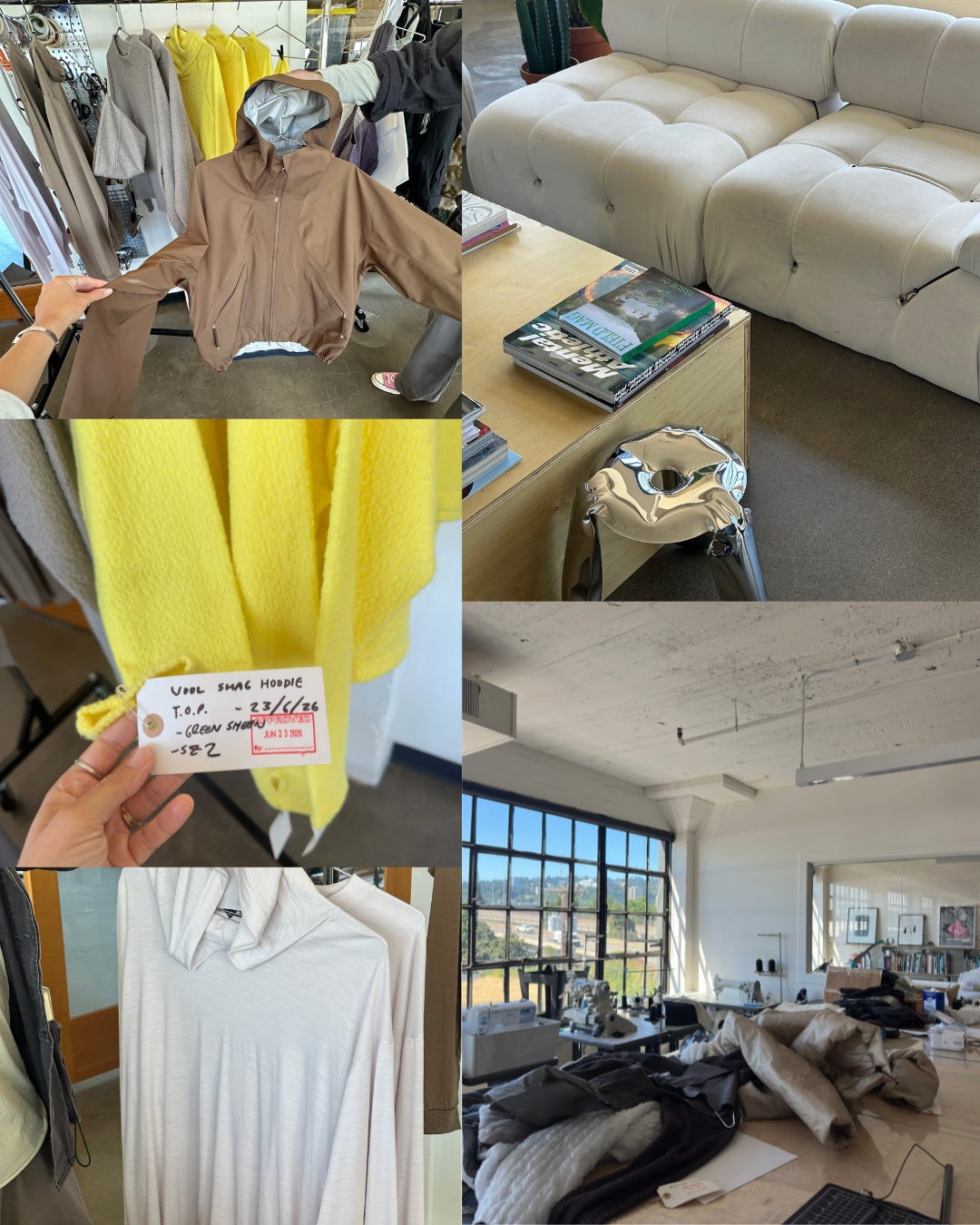
For gnuhr, color inspiration often comes from the natural world (like these rocks), though the brand is also willing to branch out. Soon, it’s introducing a neon yellow called Green Sheen. There’s a pink, too. “Color changes the entire mood of the piece, and there’s, you know, the whole psychology behind it,” Nur tells me. “It doesn’t change anything about the physical properties of the garment, but it definitely changes how you feel about it.” Once Pontetorto’s job is done and the fabric leaves Italy, it travels to gnuhr’s partner factory in Los Angeles, where it is cut and sewn into finished garments—by skilled people, not robots.
While gnuhr’s garments aren’t made from only wool like, say, a Mairin sweater, the addition of nylon gives them extra durability. One of the debates I often have with myself and with others is whether the most sustainable garment is one made from the “purest” and “cleanest” materials or the one that lasts the longest. I always come back to the latter. Nur sees it the same way: “Essentially, there isn't an ideal fabric, you know, especially in terms of environmental footprint. Buying anything is gonna have an impact. Hopefully we're making something that if someone does buy it, they're gonna get the maximum use out of it. It's going to last hopefully as long as possible for what they needed it for.”
This chapter was timed perfectly because next time, we’re going inside a wool mill (or two) right here in Portland where they process fine fibers. In case you didn’t catch it, the last chapter was about a product designer’s quest to make a backpacking collection entirely out of natural fibers. Most pieces are made with some percentage of wool!
https://corertex.it/en/history-of-the-prato-discrict/
https://brunelleschi.imss.fi.it/itineraries/biography/GiovanBattistaMazzoni.html
https://www.pontetorto.it/tecnowool-merino-eng/
Thank you for that last paragraph. I tend to have black-and-white thinking in regards to material literacy, and while I am pretty puritanical about natural fibers only, there is a place where synthetics will result in a more functional, stable garment that ultimately ends in less consumption overall.
Long live the wool series ❤️